September 19, 2013

The Minotaur Takes a Cigarette Break and Other Updates

I haven't turned on my television in two weeks. There it sits, an unused focal point in my living room, gathering dust and acting like a shiny black mirror.

Not much seems to interest me anymore. I remember enjoying Breaking Bad and looking forward to the new season. I also liked The Walking Dead, Boardwalk Empire and Dexter. But apparently I didn't like any of them enough to keep watching.

So what have I been doing with my time?

I just finished reading The Minotaur Takes a Cigarette Break by Steve Sherrill (highly recommended). It's a bit odd at first, but once you get used to the idea of the 5,000 year old Minotaur living among humans in the modern-day American south, it's a great read.

Now I'm reading The Final Confession of Mabel Stark, a fictional account of the life of a circus performer during the 1920s. So far it's excellent. I bought it used for one penny on Amazon. Pretty good bargain, if you ask me, although the shipping did cost $3.

I've also been fencing in the newest raised garden bed in my backyard with re-purposed wooden boards I found in the shed.

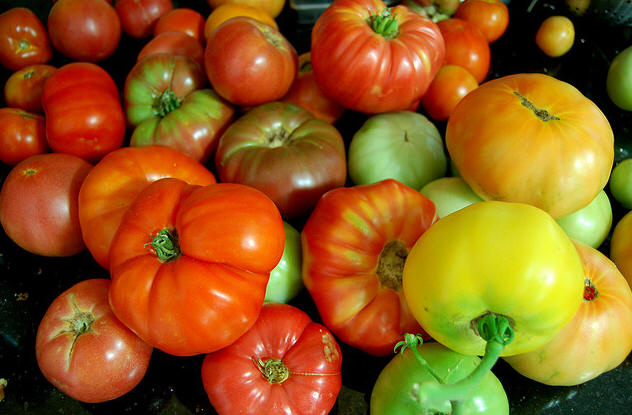
Speaking of gardens, I've also eaten about ten bazillion tomatoes this month alone. They took their sweet time ripening. But once they did, they ripened hard.

Been playing a little guitar again, too. Next month I'm going to see Bonnie Prince Billy perform in Providence so I've been teaching myself (or re-learning) a bunch of his songs. There's no better way to get inside a song, to inhabit it so to speak, then by learning how to play it.

Yesterday I went to the dentist. Next week I have my annual physical. And at some point, I need to start looking for a new car, which I'm dreading.

This is a pretty dull post, but there you have it. My September in a nutshell. I think I need some kind of excitement or something.

August 05, 2013

John Henry

Just in case you missed it or you live under a rock, Red Sox owner John Henry is the new owner of The Boston Globe. Both the newspaper industry and the sports world are abuzz. What kind of owner will he be? Is he a sports guy trying to be a newspaper man or is he a businessman who saw an opportunity and took it?

Personally, I think Mr. Henry is all of these things and more, which makes his purchase a good thing for Boston and for journalism. Before laying out my reasons, I'll admit to no small amount of hero worship where Henry is concerned.

As someone who came of age during the benevolent, but ultimately unsuccessful Yawkey years, I was used to disappointment when Henry bought the ballclub in 2002. From Bucky Dent to the 1986 Mets debacle, we Sox fans were used to losing. But after the 2004 season, arguably the greatest Red Sox season in franchise history, we got used to winning. Henry and company helped instill a sense of pride in Red Sox Nation.

This is why I think he will be a great owner for the Boston Globe. Henry knows how to manage a business, hires great people and invests when needed. What's not to like?

August 04, 2013

The Son, by Phillip Meyer

I have just finished reading The Son by Philipp Meyer and doubt I'll read a better book this summer, maybe even this year.

Spanning more than 150 years, the saga of the McCullough family is told from three points of view. Having been abducted by Comanche Indians as a teenager in frontier Texas, family patriarch Eli, also known as The Colonel, is easily the most fascinating character and the centerpiece of the novel. His son Peter and great-granddaughter Jeannie round out the decades where we see major events unfold as the McCullough family grows (largely because of Jeannie's leadership) to become multi-millionaire Texas oil barons.

Part historical saga, part western, this book occupies a space somewhere between Huck Finn and Lonesome Dove; a coming-of-age tale that spans four generations, with the settlement and rise of Texas as a backdrop.

Like Twain and McMurtrey, Meyer succeeds in offering a book about man's connection to the land and the inherent violence that comes with it. Be warned though - it's not for the squeamish.  From frontier clashes to the torture and rape of captives, no detail is spared.

I wouldn't be surprised to see this title nominated for a Pulitzer or National Book Award.

May 25, 2013

Things Lawyers Say

Part of the job of the principal is to attend legal proceedings and testify on behalf of the school. It was at one of these hearings when I realized that lawyers have an informal language all their own. I don't mean legalese or anything like that. Everyone knows the verboseness of the legal profession can be mind-numbing, what with all the heretofore's and whatsoforths, etc.

What I'm talking about is more in how rival lawyers interact with each other, how they ask questions and make statements, as well as the words they choose. In many ways, it's like an elaborate mating ritual only instead of feathers and catcalls lawyers use specific words, dramatic theatrics and a lot of hot air.

Here are a few terms and their underlying meanings that I've picked up along the way.

When a lawyer starts his question with "Do you meant to tell me that..." what he actually means is "I'm not going to believe whatever it is you say next and I hope no one else does either. And they accent certain words for greater effect. " Do you really mean to tell me, Mr. Wheeler, that this memo with your signature is actually your memo?"

Conversely, when a lawyer starts with, "Isn't it true that..." , what he or she means is "I believe this and so should whoever else is listening." All I could think of when this phrase was delivered was just about every episode of Law and Order that I've ever watched.

There is also a certain way lawyers interrupt each other. When one lawyer is talking and another lawyer interrupts him, he starts his interrupting sentence by holding up his hand and saying, "If I may". While this sounds polite it really means "shut the hell up and let me say something." In a legal sense, you could almost think of the phrase as like a weak objection of sorts. Whatever the other guy is saying isn't offensive enough for the other lawyer to yell "objection!" so he says this instead.

At one hearing I attended, opposing lawyers kept calling each other "brother" as in "What my brother fails to address here is the issue of relevancy." I have to admit to finding the use of this term odd. To call someone "brother" definitely has an old-world feel to it. All I kept thinking of was English judges with wigs and robes. That, or college-aged potheads at a Dave Mathews show. "Hey Brother, pass that one-hitter here."

I'm not sure how a female lawyer would be addressed as I have not yet been in that social situation. Somehow, when I imagine it, I can't seem to see a male lawyer calling a female lawyer "sister" without getting punched in the nose. Trust me though, I'll keep an eye out for this encounter and report back.

Some lawyers, especially those who get to argue in front of a crowd, like to use one-liners to make a point. The most famous quip is Brendan Sullivan, who was Oliver North's attorney during the Iran-Contra hearings. When questioned as to why he kept conferring with Mr. North before every answer, he replied with the now-famous line, "I'm his lawyer. I'm not a potted plant." This one line got Ollie off, if you ask me.

Sometimes, if you're really lucky, you get to see some great theatrics too. When emotions run high there's sure to be a lot of fist-pounding and eye-rolling. Eventually, angry looks get exchanged, papers get tossed in front witnesses with a vengeance, and the whole thing becomes a sideshow, better than anything on television at the moment if you ask me.

But the final thing lawyers say is just about universal, meaning I don't think I've heard one lawyer ever not say it. Once I tried counting how many times this phrase was said but I lost count before lunch. And since so many of them say this line, I imagine it must get taught in law schools everywhere.

So what's the one thing they all say?

"Let's take a break."


May 18, 2013

Working Out(side)

For my entire life I've despised yard work of any kind. Raking leaves, weeding, mowing, pruning. I hated everything about it.

This is no longer true. I have succumbed to the pleasures of working outside.

Plucking weeds and propping up the pepper plants growing in my garden is my new Friday night activity, the one thing I look forward to most at the end of the work week.Where I once watched HBO dramas and played video games, I now watch out for cabbage maggots, cutworms and aphids. Kneeling in dirt with fistfuls of manure has become meditation for me.

What's so fun about hauling dirt in an old wheelbarrow I found in the shed? The answer is everything, from fixing the broken tire axle before I could use it to the scrape of the shovel on its rusted metal inside as I scooped the dirt and spread it around.

Why, at the age of 43, did I suddenly start enjoying this sort of thing? One theory is the winter of 2013 was so brutally long that I have since gained a new appreciation for the nice weather. But I've already got my fall and winter plantings scheduled and I know that by, say late-August, I'll be looking forward to the cold once again. So it's definitely not a warm weather thing.

Could it be that I'm starting to lose brain cells and therefore seemingly mindless activities now attract my attention? No, no. Gardening is as complicated and rigorous a mental activity as you want it to be. There are planting charts to consult and structures to build, and pests to outsmart. Plus I do a lot of deep thinking out in my backyard, much more than I did watching reruns of Seinfeld.

In her blog post "The Science of How Your Mind-Wandering Is Robbing You of Happiness", Maria Popova explains how "people are less happy when they're mind-wandering, no matter what they're doing." I wonder what this means for activities like gardening. Am I being mindful when I'm ripping chunks of weed roots from the ground and shaking the loose dirt over my parsley stalks? Or am I thinking about something else, like what are my goals for the second half of my life? It's hard to know if this is being mindful or if this is mind-wandering.

I think I'll ponder this while I build a chicken-wire structure for my blueberry bushes to latch onto.


May 11, 2013

Labels of Mistrust

When it comes to food labels, I don't trust store brands.

Last week I paid $8.99 for Starbucks brand coffee instead of $5.99 for Stop and Shop's "Dark Blend", which, I should add, was placed suspiciously next to its brand name counterpart. This marketing tactic is, of course, part of the reason why I avoid purchasing generic brands in the first place. I don't like them "suggesting" that it's Starbucks. Either come out and say it or don't.

The whole thing seems dishonest to me. I don't like fuzziness and vague ideas where my food is concerned. Sure I could save a few bucks here and there, but as Sarah likes to say, cheap and inexpensive are two different things. Cheap refers to quality, inexpensive refers to price.

And that's really the issue for me. Are store brand products cheap or inexpensive?

Are those really Planter's Peanuts? Or are they some other, less desirable peanuts?

Can't you just imagine executives from Nabisco making sure all the broken Cheerios go into the private label Wheat-O's box? Just like I bet executives at General Mills tell all their workers to make sure the ugly carrots go in the Sam's Club wrappers.

Over at DelMonte foods, the production supervisor says, "Hey Sam, put the clumped-up raisins in the Wal-Mart boxes. Keep the good ones for us."

Now all of this may or may not be true. But that's really the issue here - reasonable doubt.

It stands to reason of course that there are quality controls and it's all the same ingredients, just a different box. In that case, saps like me who purchase brand names are really just grocery store rubes who waste our money and respond to marketing gimmicks.

Who knows? It could be that I just like the bright colors that accompany corporate logos and their advertising materials? Let's be honest, the Market Basket label for creamed corn looks pretty dull next to the rolling hills where the Green Giant and his kid Sprout live.

I wonder what all this says about me? Am I cynical and distrustful? Or am I prudent and cautious?

Maybe I'm just a marketing statistic, the category of "suspicious white males with disposable incomes, short attention spans and misguided (brand) loyalty."

In other words, a consumer.

Science Fiction and Science Fact

I think we need a new term to describe science-based writing, something a bit more truthful sounding than "science fiction" but not as confident as "science fact".

In science, plenty of things start out fictitious only to end up becoming reality. Flying, space travel, 3-D printing (aka replicators in Star Trek). Robots.

Even worse, many science "facts" turn out to be fiction. Milk, eggs, even fish have each gone from good to bad and back again.

This is why we need a new phrase, a word or two that captures both the uncertainty and the inevitability of discovery. For example, it is inevitable that we discover a cure for cancer but it is uncertain what this will look like.

In the strictest of scientific terms, we could say that all of science itself is Schroedinger's cat. Throw a cat in a box and leave it there for a while. Before you re-open the box, the cat is both dead and alive, a middle-ground of existence, purgatory as perception. This, to me, is the inevitability of discovery.

So what do we call science fiction? Science writing? Pop science? Futurism?

What do we call science fact? True-for-now? Proven until proven otherwise?

Stay tuned.

April 28, 2013

An Unfriendly Proposition

Most Sunday mornings I get a large black coffee with cream on the side at Dunkin' Donuts. Only this morning it occurred to me that not only is this habit expensive and unnecessary, it's decidedly NOT Eco-friendly.

Styrofoam cup, plastic lid, waxy paper bag, and a receipt two feet long. Plus the creamers.

This seems like overkill to me. All for some hot water and coffee beans.


At least I refused the cardboard tray.

I think this is a practice I will discontinue.